

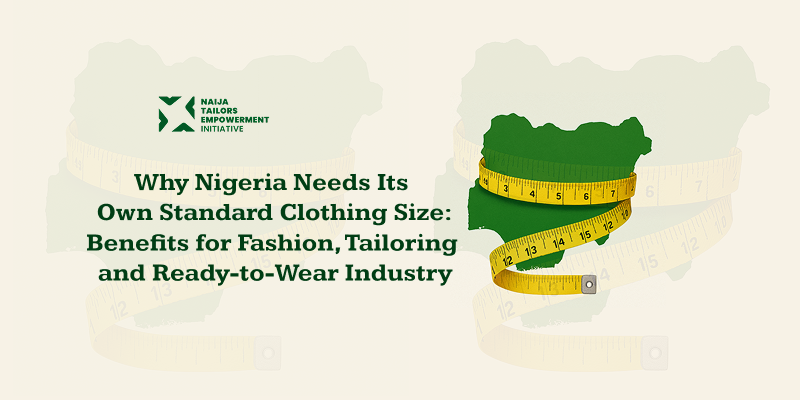
One of the biggest challenges in the Nigerian fashion industry is the lack of a standard clothing size system. From tailors to ready-to-wear (RTW) designers, sizes are often inconsistent, leaving customers frustrated and businesses struggling to keep up with global competition. For Nigeria to fully position itself as Africa’s fashion hub, creating a national standard clothing size is not just a necessity, it’s a strategy for growth, professionalism and global recognition.

What Is a Standard Clothing Size?
A standard clothing size is a measurement guide that defines body proportions (such as bust, waist, hip, height, and shoulder width) to create consistent clothing sizes. Globally, different regions have developed unique sizing systems:
- US Sizes: Typically labeled as S, M, L, etc.
- UK Sizes: Slightly different from US, with labels like 8, 10, 12, etc.
- EU Sizes: Number-based, such as 36, 38, 40.
- Asian Sizes: Usually smaller, based on chest or height.
However, these systems do not account for the average Nigerian body type, which tends to differ in proportion from Western or Asian standards. This makes imported size charts unreliable for local consumers.
Check out our detailed blog post “what is standard clothing size”
Current Challenges With Clothing Sizes in Nigeria
Lack of Uniform Measurements
Most Nigerian tailors and fashion houses rely on personal, foreign or international charts. A size “10” in one brand might be equivalent to a “12” in another, leading to confusion and disappointment for customers.
Impact on Ready-to-Wear Industry
The RTW market is one of the fastest-growing fashion sectors in Nigeria, but inconsistent sizing remains a major barrier. Customers frequently return items, request alterations or avoid online purchases due to poor fitting experiences. When shoppers can’t trust clothing sizes, they hesitate to buy, especially online shoppers, they face high risks because they cannot try on clothes before purchase. This leads to abandoned carts, reduced sales and lack of trust in local fashion brands.
Why Nigeria Needs Its Own Standard Clothing Size
To Reflect Nigerian Body Types
Nigerian men and women often have unique body proportions that are not accurately represented by Western size charts. Anthropometric studies have shown differences in torso length, hip-to-waist ratio, and overall body shape. A standardized Nigerian system would reflect these realities and create better fitting clothes for the local market.
Boosting the Local Fashion Industry
Having a recognized clothing size system makes it easier for designers to produce clothes in bulk. This would improve the ready-to-wear sector, reduce guesswork, and allow Nigerian fashion brands to compete with global players like Zara, H&M, and Shein.
Supporting Tailors and SMEs
Small and medium sized fashion businesses would benefit significantly. With a national sizing guide, tailors can save fabric, reduce alteration costs, and work more efficiently. This would also increase customer satisfaction and build trust in local tailoring services.
Economic and Global Benefits of Clothing Size Standardisation
- Growth of Ready-to-Wear Exports: Nigerian designers could confidently export RTW clothing, knowing their size labels are internationally recognized.
- Building Customer Trust: Standard sizes help customers feel confident when shopping online or in-store.
- Nigeria as Africa’s Fashion Hub: With over 200 million people, Nigeria could set the standard for African sizing, influencing regional trade and fashion recognition.
Steps Required To Establishing a Nigerian Clothing Size Standard
- Government and Industry Collaboration – Agencies like NTEI (Naija Tailors Empowerment Initiative), SON (Standard Organization of Nigeria) should work with Ministry of art and culture.
- Nationwide Anthropometric Studies – Collect accurate body measurements across Nigeria’s diverse ethnic groups.
- Partnership With Fashion Schools and Designers – Ensure upcoming fashion professionals are trained with the standardized chart.
- Public Awareness and Adoption – Encourage RTW brands, boutiques, and e-commerce platforms to adopt the standard.
Conclusion
For Nigeria to strengthen its fashion and RTW clothing industry, adopting a national standard clothing size is a game changer. It will make shopping easier for customers, reduce waste for designers, and boost Nigeria’s global competitiveness. The time has come for fashion stakeholders, policymakers, and designers to unite in creating a clothing size system that reflects the true Nigerian body type.
By taking this bold step, Nigeria can set the pace for African fashion standardization and become a global leader in ready-to-wear innovation.

[…] Check out our blog post “Why Nigeria needs its own standard clothing size” […]