

Starting a ready to wear clothing business in Nigeria can be very profitable if done right, Nigeria has a huge market with estimated population of over 234 million people that are highly fashionable. But just like any other industry in the world, the Nigerian RTW clothing industry has its own challenges and in this post we will be looking into these challenges and see how they directly affect the RTW clothing businesses in Nigeria.
Limited Access To Funding and Business Support
Many local RTW clothing business owner struggle to get access to capital or investment, business management skills and resources required to scale up production, buy better machinery, lower costs and grow their business, this limits their ability to compete at lower price points.

Inconsistent Quality And Sizing Standards
Many brands struggle to maintain consistent sizing, stitching quality, and finishing, this is key factor to customer trust and brand loyalty. Nigeria does not have its own standard clothing size and relies heavily on other countries’ body size data to cater to its RTW (Ready-to-Wear) clothing market. This practice affects the Nigerian RTW clothing industry in the following ways:
- Inconsistent Fit Across Brands: Without a national sizing standard, each brand uses its own measurements, leading to confusion and poor fit for consumers. A person might be a “Medium” in one brand and a “Large” or “Small” in another.
- High Return and Exchange Rates: Customers often return or exchange items due to sizing issues, increasing costs for retailers and reducing customer satisfaction.
- Low Consumer Confidence: Shoppers may hesitate to buy RTW clothing, especially online, due to uncertainty about the fit.
- Increased Production Costs: Brands must produce more size variations or adjust sizing frequently to accommodate diverse body types, increasing production complexity and cost.
- Inventory Management Issues: Inaccurate demand forecasting for different sizes leads to overstocking of some sizes and stock outs of others.
- Limited Export Potential: Without standardized sizes, it is difficult for local RTW brands to scale internationally, as global buyers prefer size consistency.
- Barriers to E-commerce Growth: Online clothing sales depend heavily on reliable sizing. Inconsistent sizing deters online shoppers.
- Customer Dissatisfaction and Loss of Brand Loyalty: A poor fit experience may drive customers away from a brand permanently, even if the design or quality is good.
- Challenges in Mass Production: Mass-producing garments becomes risky when sizing is not predictable or standardized across the target market.
- Increased Need for Tailoring: Many consumers end up altering RTW clothing, which defeats the purpose of convenience and adds extra cost.
Market Competition and Consumer Perception
The Nigeria market is flooded with imported fast-fashion (e.g.,New and used clothing from brands like Shein, Zara, Assus etc.), which are cheaper alternatives. Many consumers still perceive foreign brands as superior, making it hard for local RTW brands to justify higher prices.
Hight Production Cost
Unstable electricity supply
The Nigerian economy is yet to attain its full industrialization potential due to insufficient energy supply. Local businesses in Nigeria often rely on diesel generators to power their operations, which greatly increases the cost of producing ready-to-wear products, as businesses have to spend more on manufacturing.
High cost of raw material
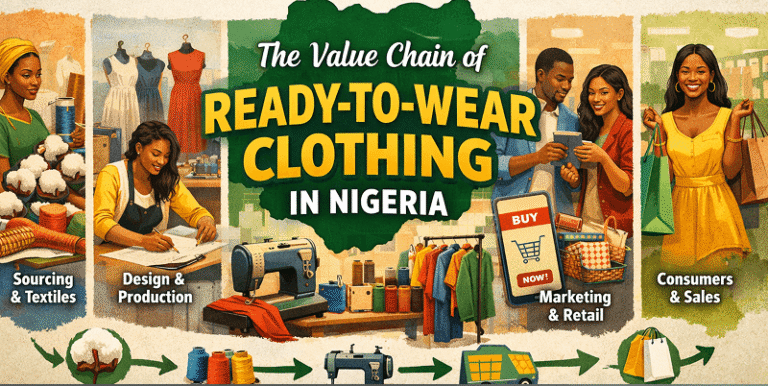
The Nigerian ready-to-wear clothing industry heavily depends on imported raw materials such as textiles, sewing accessories, and equipment, mostly from China, to power its operations. This reliance leads to high production costs, making it difficult for Nigerian clothing brands to compete with their international counterparts, even within the local market.
Lack of experienced factory line workers
There’s a shortage of professional pattern cutters, tailors, and finishers trained for mass production, training institutions often focus on bespoke tailoring rather than industrial or RTW manufacturing. As the country has few clothing factories. Most tailoring businesses in Nigeria focus on bespoke services, and as a result, many new workers are trained by these small businesses. This, in turn, produces more tailors who want to go into bespoke rather than factory-based production.
Weak Online Presence and E-commerce Barriers
Nigeria’s internet literacy rate currently stands at around 50% and Many brands lack strong digital marketing and e-commerce infrastructure. Delivery and return logistics for online sales can be unreliable or costly. Low consumer trust in online transactions still affects sales for brands that has gone digital.
Lack of Manufacturing Infrastructure
Few large-scale garment factories like Beyond Clothing exist for local brands to outsource production in Nigeria. Small business must produce in-house or partner with local tailoring businesses, this practice makes production cost higher, limiting output and consistency.
Check out our post “Why you should start a ready to wear clothing business in Nigeria“
Conclusion
Despite all these factors, the Nigerian ready-to-wear clothing industry is rapidly growing and has gained a lot of recognition, even on the international stage, especially within the African community in the diaspora. The presence of social media influencers has increased local awareness, and more Nigerians are now embracing local brands. With proper planning and strategic marketing, one can build a successful clothing brand in Nigeria.


It’s interesting how a large population like Nigeria’s doesn’t automatically guarantee easy success in RTW, despite the high fashion interest – this reminded me of some resource allocation strategies discussed on -tinyfun.io/game/brainrot-clicker. What are some of the biggest cost hurdles for these businesses specifically?
[…] Check out our post: Challenges Faced By Ready To Wear Clothing Businesses In Nigeria […]