Nigeria’s ready-to-wear (RTW) clothing industry is one of the fastest-growing sectors in the country’s creative economy. With rising youth entrepreneurship, increasing demand for affordable fashion, and the power of social media marketing, the Nigerian fashion value chain has become a major driver of employment, innovation, and revenue.
Understanding the value chain of ready-to-wear clothing in Nigeria is essential for fashion entrepreneurs, investors, designers, and policy makers looking to build sustainable and profitable fashion businesses.
This article provides a complete breakdown of each stage in the RTW clothing value chain and how they connect.
What Is Ready-to-Wear Clothing Value Chain?
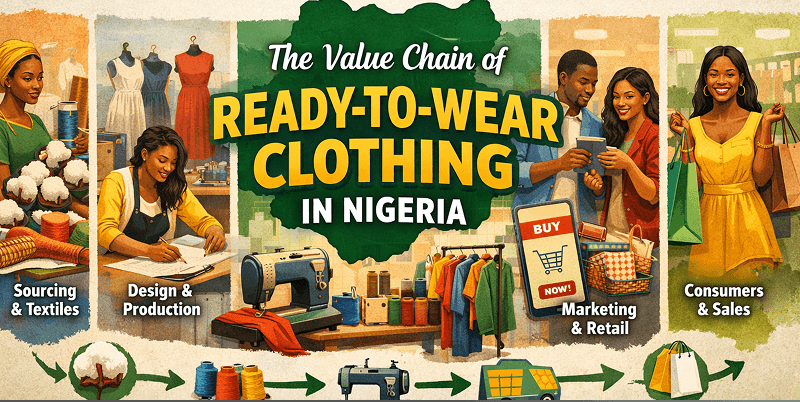
The value chain refers to all activities involved in producing, distributing, and selling finished garments, from sourcing raw materials to delivering clothing to the final consumer. The value chain focussed on value added at each stage to bring about competitive advantage.
In Nigeria, the RTW fashion value chain includes:
- Raw Material Sourcing
- Textile Production & Importation
- Design & Product Development
- Garment Manufacturing
- Branding & Marketing
- Distribution & Retail
- Consumer & After-Sales Service
1. Raw Material Sourcing
This is the foundation of the value chain. It involves obtaining cotton, wool, and petrochemicals. This raw materials is then transformed into Natural fibres, Synthetic fibres and sewing accessories (buttons, zips, threads, labels).
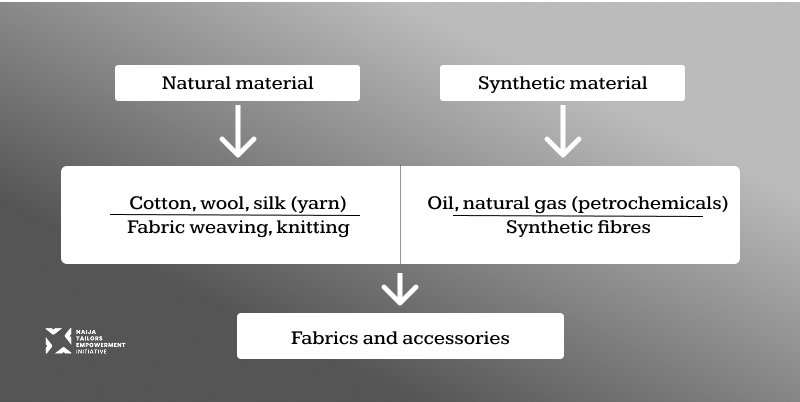
Nigeria produces cotton locally, but most of the textile input is still imported due to limited large-scale textile processing infrastructure.
2. Textile Production & Importation
Most Nigerian fashion brands source fabrics from:
- Local markets (Aba, Lagos, Onitsha, Kano)
- Asian textile manufacturers (China, India, Turkey)
- African producers (Ghana, Benin Republic)
Textile importation remains critical due to insufficient domestic textile capacity.
3. Design & Product Development
This stage transforms fabrics into fashion concepts:
- Fashion research & trend analysis
- Pattern drafting
- Prototyping
- Sample production
- Size grading
Designers and product developers create clothing collections based on consumer demand and seasonal trends.
4. Garment Manufacturing
This is where large-scale value is created. Activities include:
- Cutting
- Sewing
- Finishing
- Quality control
- Packaging
Manufacturing occurs in small workshops, medium factories, and cooperative clusters in cities like Abuja, Lagos, Aba, Onitsha, Ibadan, and Kaduna.
5. Branding & Marketing
Strong branding drives profitability in Nigeria’s RTW market.
Key activities:
- Brand identity development
- Logo & packaging design
- Digital marketing
- Influencer marketing
- Fashion campaigns
- Social media advertising
This stage directly influences consumer perception and sales volume.
6. Distribution & Retail
Distribution channels include:
- Online stores & social commerce
- Physical fashion boutiques
- Shopping malls
- Fashion exhibitions
- Wholesale markets
Logistics companies and courier services play a major role in national and international deliveries.
7. Consumer & After-Sales Service
This final stage ensures long-term business sustainability:
- Customer service
- Feedback collection
- Product improvement
- Returns & exchanges
- Loyalty programs
Satisfied customers become repeat buyers and brand ambassadors.
Check out our post: Challenges Faced By Ready To Wear Clothing Businesses In Nigeria
Importance of the RTW Clothing Value Chain to Nigeria’s Economy
The ready-to-wear clothing value chain contributes significantly to:
- Job creation
- Youth empowerment
- SME growth
- Export revenue
- Cultural promotion
With proper policy support and infrastructure development, Nigeria’s RTW industry can become a global fashion powerhouse.
Conclusion
Understanding the value chain of ready-to-wear clothing in Nigeria allows entrepreneurs and investors to identify opportunities, reduce production costs, improve efficiency, and build competitive fashion brands. Every stage of the chain is vital to the success of Nigeria’s fashion economy.