

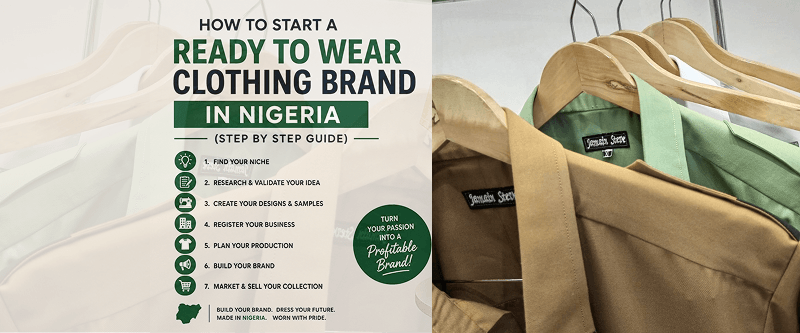
The Nigerian fashion industry is estimated to be worth $4–6 billion, making it one of the largest creative sectors in Africa. Starting a ready-to-wear (RTW) clothing brand in Nigeria presents a promising business opportunity. Several socio-economic and cultural factors make this venture not only viable but potentially highly profitable. Below are key reasons why launching a RTW clothing line in Nigeria is a smart decision:
- High birth rate
- Large Population
- Nigerians embrace a fashionable and trendy lifestyle
- Access to international market
Meaning of Ready-to-Wear Clothing
Ready-to-wear (RTW) refers to mass-produced clothing manufactured in standardized sizes and available for purchase directly from retailers without customization.
Key characteristics of ready-to-wear clothing are as follows:
- Standardized Sizes
- Mass Production
- Off-the-Rack Availability
- Affordability
Key Challenges in Nigeria’s Ready-to-Wear Clothing Industry
- High Dependence on Imported Raw Materials
- Limited Access to Funding and Business Support
- Inconsistent Quality And Sizing Standards
- Market Competition and Consumer Perception
- High Production Costs
- Lack of Manufacturing Infrastructure
- Weak Online Presence and E-commerce Barriers
The steps below will guide you in successfully starting a ready-to-wear clothing brand in Nigeria, regardless of your niche.
1. Identify your niche and target audience
A niche is a specialized segment of the market that focuses on specific customer needs. Instead of trying to serve everyone, choosing a niche helps you:
- Differentiate your brand in the crowded fashion market.
- Build customer loyalty by meeting the exact needs of your target audience.
- Save costs and resources by focusing on what matters most.
- Increase profitability through unique value and premium pricing.
For example, instead of selling “general clothes,” you might focus on corporate wear for young professionals or affordable traditional RTW outfits for students.
Check out blog post: How to Choose The Perfect Niche For Your Ready-To-Wear (RTW) Clothing Business In Nigeria
Your Target Audience
Ask yourself:
- Who do I want to serve with my product? (Age, profession, location, income level, education level, gender, family status, etc.)
- What problems does my product solve? (Affordable prices, trendy fashion, quality fabrics, cultural expression)
- Where do they shop? (Online platforms, Instagram, fashion hubs, local boutiques)
For example, a niche like affordable chic dresses for female students is easier to market ( to target audience comprising of age: 18 – 30 years, gender: female, occupation: students, behaviour: shop on Tik Tok) and build a loyal following, than trying to serve “everyone who wears clothes.”
2. Create strong brand identity
Brand identity is the collection of all visible and conceptual elements a company creates to present itself to the public. It is a strategic combination of tangible and conceptual aspects that work together to shape how a business is perceived by its audience and differentiate it from competitors.
To better understand brand identity, let’s use a person as an example., Individuals are a combination of elements such as their name, origins, personality, values, beliefs, story, and physique. Brand identity can be classified into the following key components: Check out our blog post: How to Create Strong Brand Identity
Elements of Brand Identity:
- Logo
- Color and font style
- Brand packaging
- Brand product label
- Imagery
- Brand Name
- Website and online presence
- Brand tagline
- Brand story
- Brand tone
- Vision and mission
3. Register your business name
Choose a simple, easy-to-remember, and memorable brand name that will resonate with your target audience. Visit the Corporate Affairs Commission (CAC) website and check the availability of your preferred business name. All businesses operating in Nigeria are required by law to register with corporate affairs commission.
Devdott will handle your fashion brand image and business Registration In Nigeria, Visit devdott now to get started
Having a registered business gives you the ability to:
- Open a bank account in your brand name.
- Apply for grants and business loans.
- Differentiate your brand from competitors.
- Increase customer trust and credibility.
4. Design your collection
Designing a collection for your clothing brand is a complex process involving many steps executed in sequential order to produce the best results.
A fashion design collection is a curated, unified series of garments and accessories, It represents a designer’s vision and artistic creativity with commercial viability, typically released in seasonal cycles. The following are the basic steps involved in creating a fashion design collection:
- Research and design idea
- Sketch idea
- Create pattern templates
- Map out design accessory
- Prototyping (test garment and sizing)
You need to create a Tech pack, If you intend to send your design out to garment factory for production,
5. Production and Inventory
Your design collection can be produced either in-house or outsourced to another business that handles the production process.
In-House Production: This involves setting up your own workspace, equipment, staff, and internal production system. Although establishing an in-house production facility requires significant capital investment, it can substantially reduce production costs and turnaround time when managed effectively.
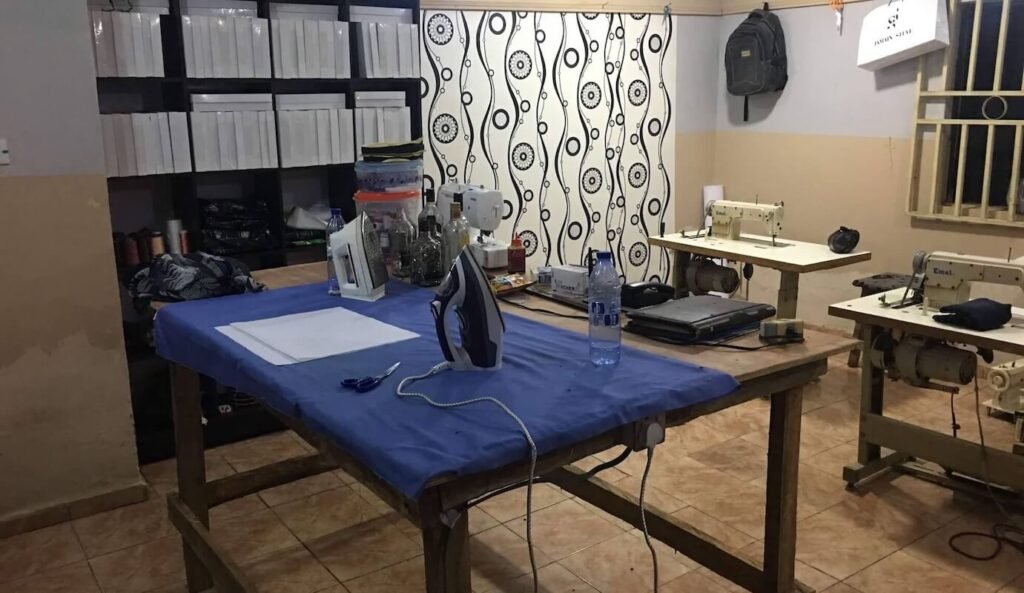
Depending on your niche, some of the basic equipment required for in-house production includes:
- Workspace/Shop
- Straight sewing machine
- Overlocking machine (serger)
- Pressing iron
- Scissors
- Generator (backup power supply)
- Buttonhole machine
- Button sewing machine
- Garment steamer
- Zip insertion machine
- Monogram machine
- Embroidery machine
Outsourced Production: This means your design collections are produced by a third party, such as a tailoring business, fashion house, or independent garment producer. This production method requires little to no setup cost. However, it is generally more expensive per unit and often takes longer because the brand has limited control over production schedules and timelines.
You can visit TailorPlug to find verified, experienced, and reliable tailors or fashion businesses to produce your design collections in Nigeria.
6. Product Pricing
Pricing a clothing collection should be based on both production costs and market positioning rather than guesswork. Clothing brands should first calculate the total cost of producing each garment, including fabric, trims, labor, packaging, and overhead expenses such as rent, utilities, and marketing. Collection development costs, such as photoshoots, design work, and promotional campaigns, should also be distributed across the expected number of units sold.
Once the true cost per piece is determined, brands can apply a markup that aligns with their target market, whether budget, mid-range, premium, or luxury. Finally, it is important to compare prices with similar brands to ensure competitiveness while maintaining healthy profit margins. This approach helps ready-to-wear businesses price their collections sustainably and profitably.
Recommended Pricing Formula for Nigerian Ready-to-Wear Brands
Selling price = (Production Cost + Collection Development Cost Per Unit) × 2.5–3.5(depending on your brand positioning)
This works well for most emerging ready-to-wear brands in Nigeria.
Example
- Production Cost = ₦14,000
- Design Collection Cost per unit = ₦3,000
Total Cost = ₦17,000
Selling Price:
- 2.5x = ₦42,500
- 3x = ₦51,000
- 3.5x = ₦59,500
A realistic retail price would be ₦45,000 – ₦55,000 depending on your brand positioning.
For NTEI members or small fashion brands just launching a collection, we usually recommend targeting a minimum gross margin of 60 – 70% to ensure enough cash flow for growth, marketing, and future collections.
7. Marketing and Sales channels
Understanding your target audience’s shopping behavior is essential for choosing the right marketing and sales channels for your brand. Identifying where your audience spends time online/offline is a vital insight. For a new business we recommend marketing through social media and using whatsApp Business as your sales channel.
Below is a list of channels that fashion brands can utilize:
- Physical Shops
- Social Commerce
- Business Website
- WhatsApp Business
- Online marketplace
- Ecommerce website
- Roadside location
- Dressing celebrity for special events
- Fashion shows
- Press interviews
- Television commercials
- Billboard
8. Launching and Promoting Your Brand
Launch your collection and promote it aggressively through:
- Influencer marketing
- Instagram ads
- Giveaways
- Pop-up shops
- Fashion shows
Network with other fashion entrepreneurs in Nigeria and attend fashion fairs.
Conclussion
Starting a ready-to-wear clothing brand in Nigeria requires more than creativity—it demands strategic planning, market research, strong branding, proper pricing, efficient production, and consistent marketing. While the industry presents challenges such as high production costs and competition, it also offers significant opportunities due to Nigeria’s large population, fashion-conscious consumers, and growing access to global markets. By following the steps outlined in this guide and remaining committed to delivering quality products, you can build a profitable and sustainable fashion brand that stands out in the Nigerian fashion industry.
[…] Checkout our blog post: How to start ready to wear clothing business in Nigeria […]